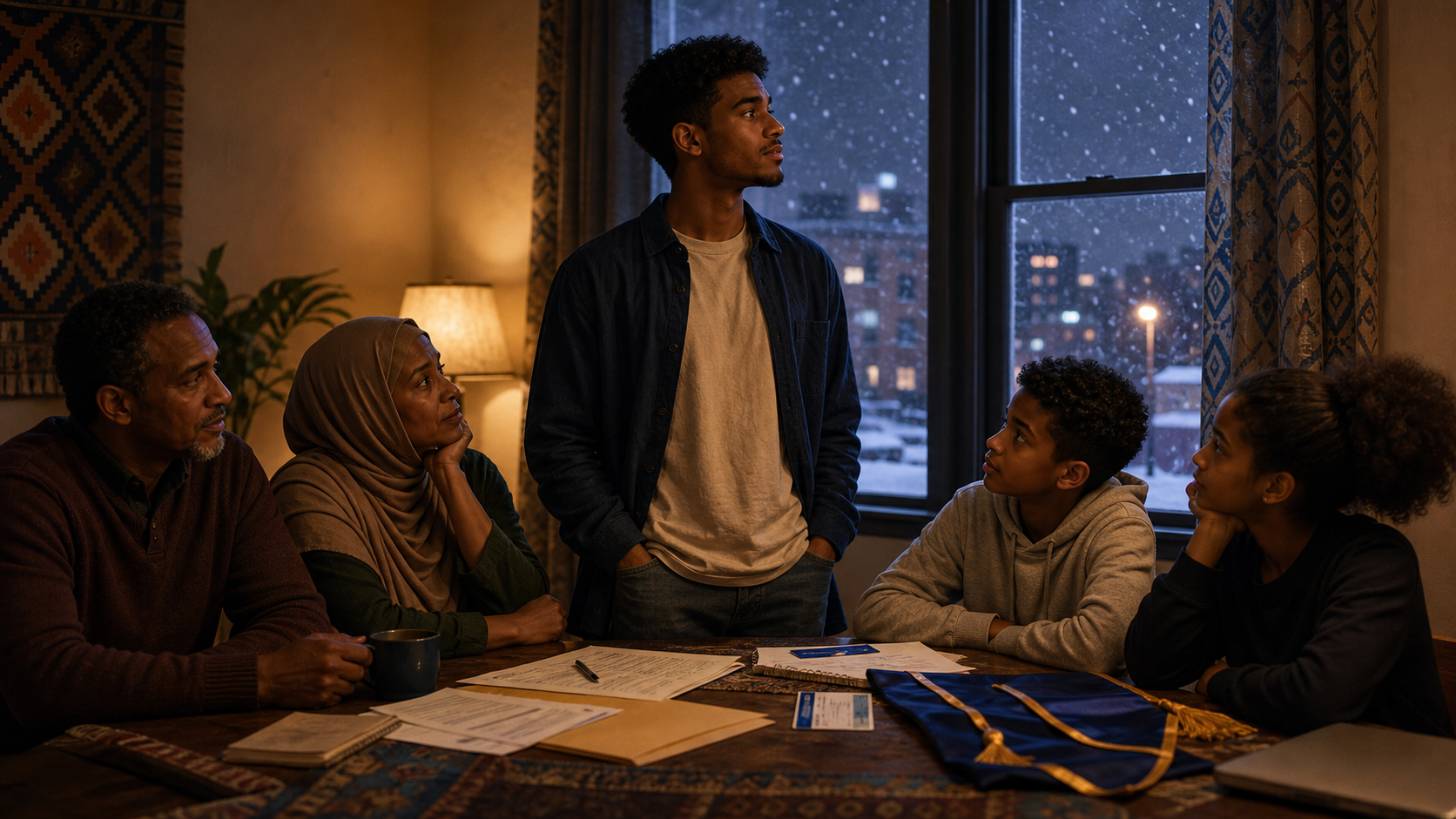
Before Libaan learned the bus routes, he learned the shape of waiting.
He waited at the government office with a folder under his arm, the kind of folder people buy when they want life to look organized. Inside were papers he did not fully understand yet: a work permit, school placement forms, an address written twice in case he forgot it, and a phone number for a cousin who answered only when he could. Outside, Minnesota was gray and cold. Not the soft cold of a morning breeze back home, but a cold that entered through the cuffs of his jacket and sat inside his bones.
At seventeen, he had already learned how to be older than his age. He had left people behind in a refugee camp near Garissa, people who still counted on him from far away. His mother did not ask for much when she called. She would say, “Hooyo, iska adkay. Illaahay ha kuu fududeeyo.” Then her voice would become quiet, and he would hear everything she did not say: school fees, medicine, rent for a room made of thin walls, younger siblings who still believed America meant the door had finally opened.
But America did not feel like a door at first. It felt like a hallway with no signs.
On his second week in Minneapolis, Libaan bought a small sketchbook from a dollar store. He told himself it was foolish, because he needed work shoes, bus fare, and a better winter coat. Still, he bought it. That night, sitting on a mattress pushed against the wall of a crowded apartment, he drew three things: a doorway, a road, and a small square of sky.
He did not call it art yet. Art sounded like something people did when rent was paid and their names were pronounced correctly. For Libaan, drawing was just a way to breathe without explaining himself.
The first school that held him was not a college. It was adult night school, in a building that looked tired from helping people begin again. He sat with men and women from many countries, all of them carrying private histories behind their notebooks. Some were learning the alphabet again. Some knew more math than their teachers guessed, but not enough English to prove it. Libaan sat near the front because the back of the room made him feel invisible.
During the day he worked in a warehouse in Brooklyn Park, lifting boxes with labels he could read faster each month. The work had a rhythm: scan, lift, stack, repeat. His hands cracked in the winter. His back learned pain as if pain were another supervisor. At break time, other workers talked about overtime, cars, cousins, court dates, weddings, and people who had disappeared into bad habits. Libaan listened more than he spoke. His English still arrived slowly, like a late bus.
One Somali man at the warehouse laughed when Libaan said he wanted to get his GED, then community college, then a degree. “Waryaa, America lacag baa laga sameeyaa, warqad lagama cuno,” the man said. You make money in America; you do not eat paper. The others laughed, not cruelly enough for Libaan to hate them, but loudly enough for him to remember.
Another man told him, “You came too late. School is for people who started here.” A cousin said he should focus on work and send money home. A friend from the neighborhood said college was a long road with no guarantee. Everybody had advice. Almost nobody had a map.
Libaan failed the math part of the GED the first time.
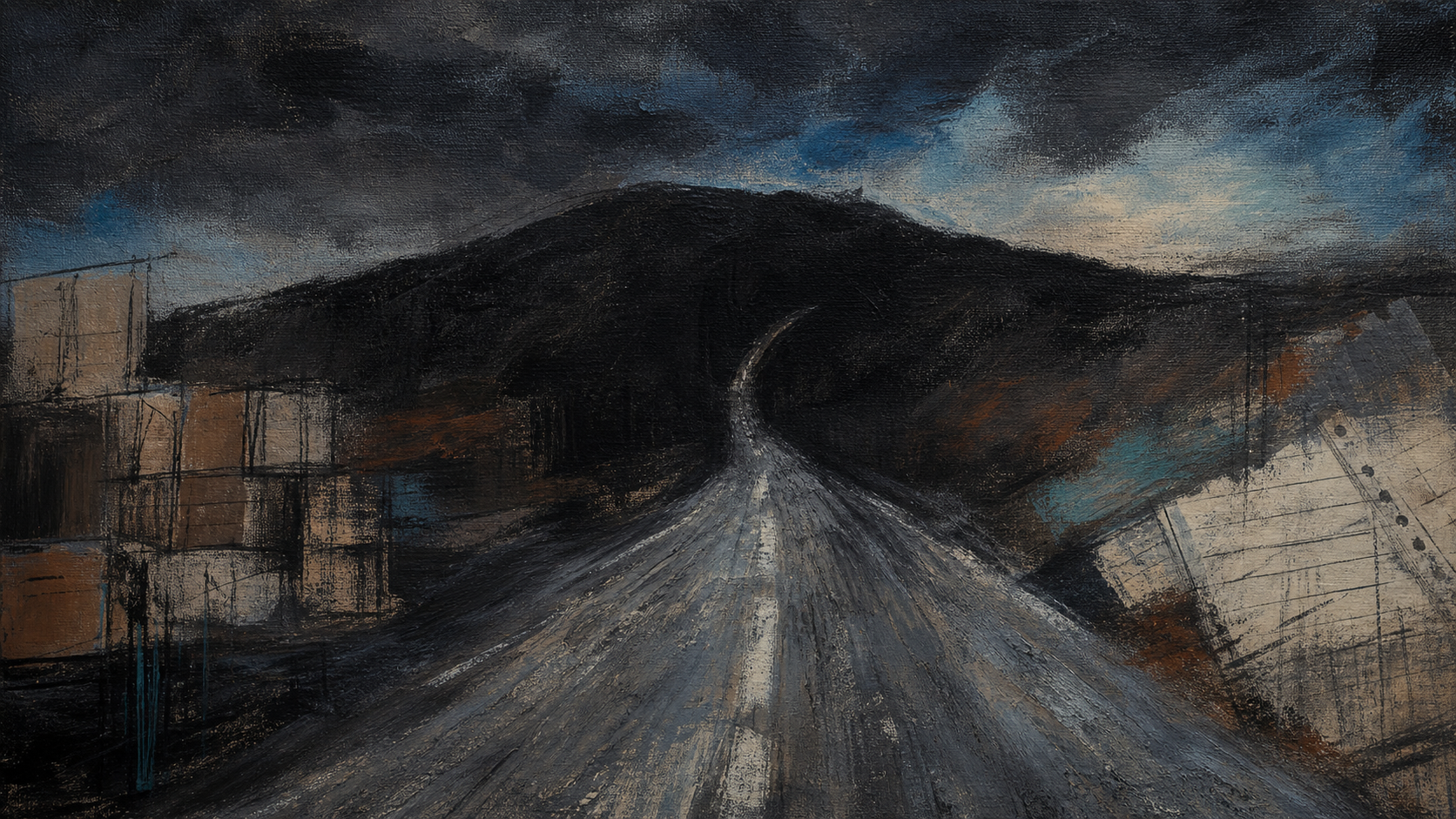
He carried the result in his pocket for three days before opening it again. The paper felt heavier than it should have. That evening, he stood at a bus stop while snow gathered on his shoulders and thought about quitting. He imagined calling his mother and telling her the truth, but he could already hear her trying to hide her fear. So he did not call. He went home, made tea, opened the sketchbook, and drew a road entering a dark hill.
The next week he returned to night school.
Nothing dramatic happened. No music rose in the room. Nobody clapped. A volunteer teacher named Mr. Harris stayed ten extra minutes and showed him how to break fractions into smaller steps. Libaan copied the steps carefully. Later, he would understand that survival often looks ordinary while it is happening. It looks like showing up again to the same chair, with the same tired body, after the same long shift.
When he passed the GED, he folded the paper into the inside pocket of his jacket and walked home instead of taking the bus. Not because he was celebrating. Because he needed time to believe it.
Community college was a different kind of loneliness. The hallways were bright, the students young, and the words moved fast. Financial aid had its own language. Registration had its own language. Professors had office hours, but no one explained that office hours were not punishment. Libaan spent his first semester trying to look like he understood everything. That almost broke him.
He worked warehouse shifts until his grades began to suffer. Then he found a security job at a quiet building where nights moved more slowly. He still walked rounds, checked doors, and answered the desk phone, but there were stretches of silence between responsibilities. In those stretches, he read chapters, rewrote vocabulary words, and practiced essays in a notebook beside the visitor log. He never announced that the job helped him study. He simply learned to use the quiet before it disappeared.
Money did not stretch. It only negotiated. Rent took its part. Tuition took its part. The phone bill took its part. Dadaab took its part too, because family does not stop being family when distance becomes expensive. Some months he sent less than he wanted and felt ashamed. His mother always said, “Hooyo, wixii aad awooddo baa nagu filan.” What you can manage is enough for us. But he knew enough did not always mean enough.
The city tested him in other ways. There were young men who had arrived before him but seemed just as lost. Some chased quick money. Some chased an image of toughness they had borrowed from pain. Some wore Somali pride loudly but could not speak gently to their own mothers. Some spoke about the system and forgot the mirror. Libaan understood the anger. He carried his own. He also understood how easy it was for a poor immigrant kid to mistake attention for respect, or noise for manhood, or survival for direction.
There were days he wanted to become hard. Hardness looked useful. Hardness looked like protection. But every time he felt himself closing, he remembered his mother saying, “Qalbi adag iyo qalbi dhintay isku mid ma aha.” A strong heart and a dead heart are not the same.
So he kept one part of himself soft enough to learn.
By his second year, Libaan had learned the hidden curriculum. Sit near the front. Ask one question after class. Find the tutoring center before you are drowning. Apply early. Keep copies of every paper. Do not disappear when you are embarrassed. Choose friends who are also building something. Let people laugh if they need to. Their laughter cannot write your assignment for you, and it cannot block the door unless you hand them the key.
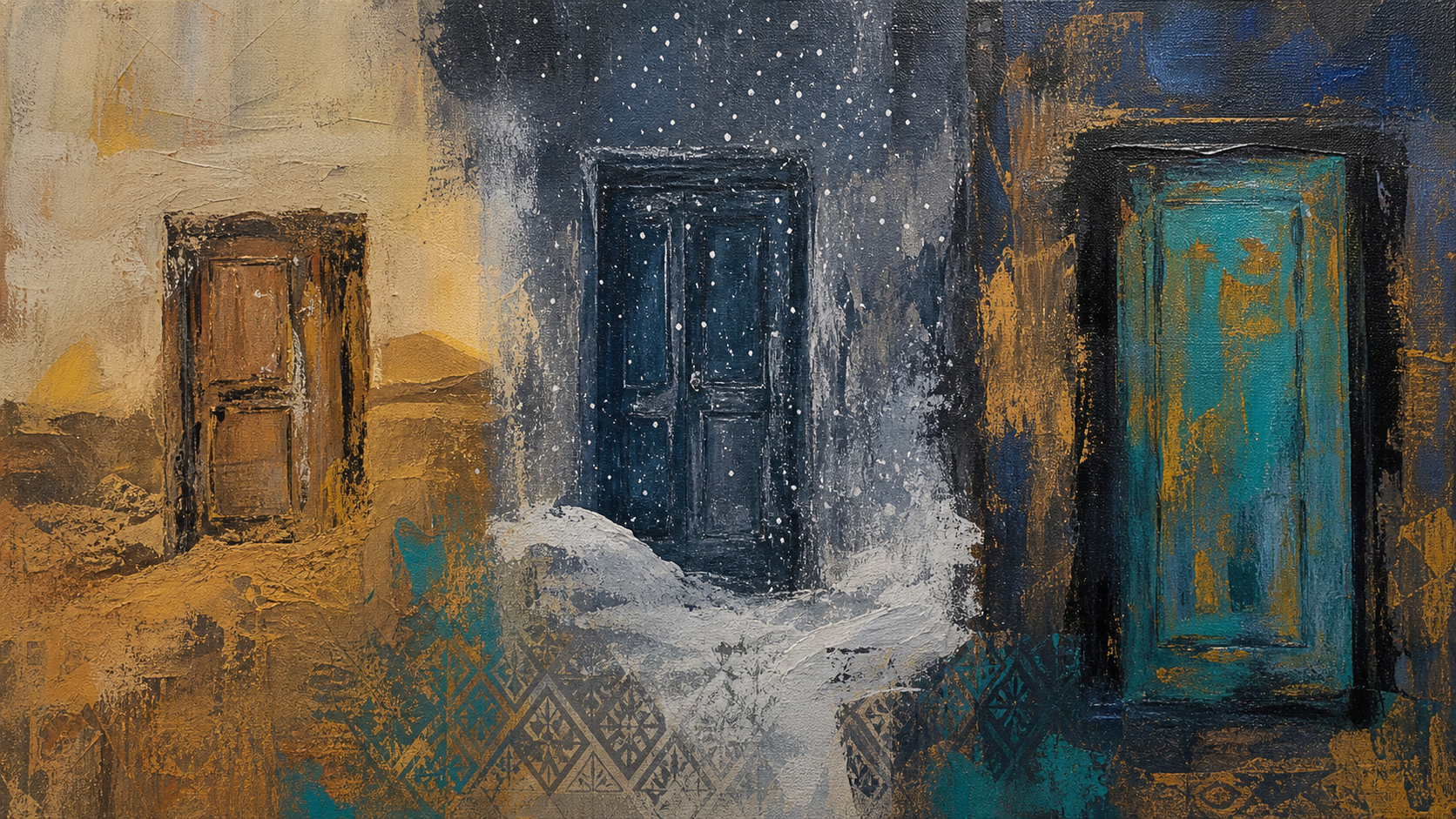
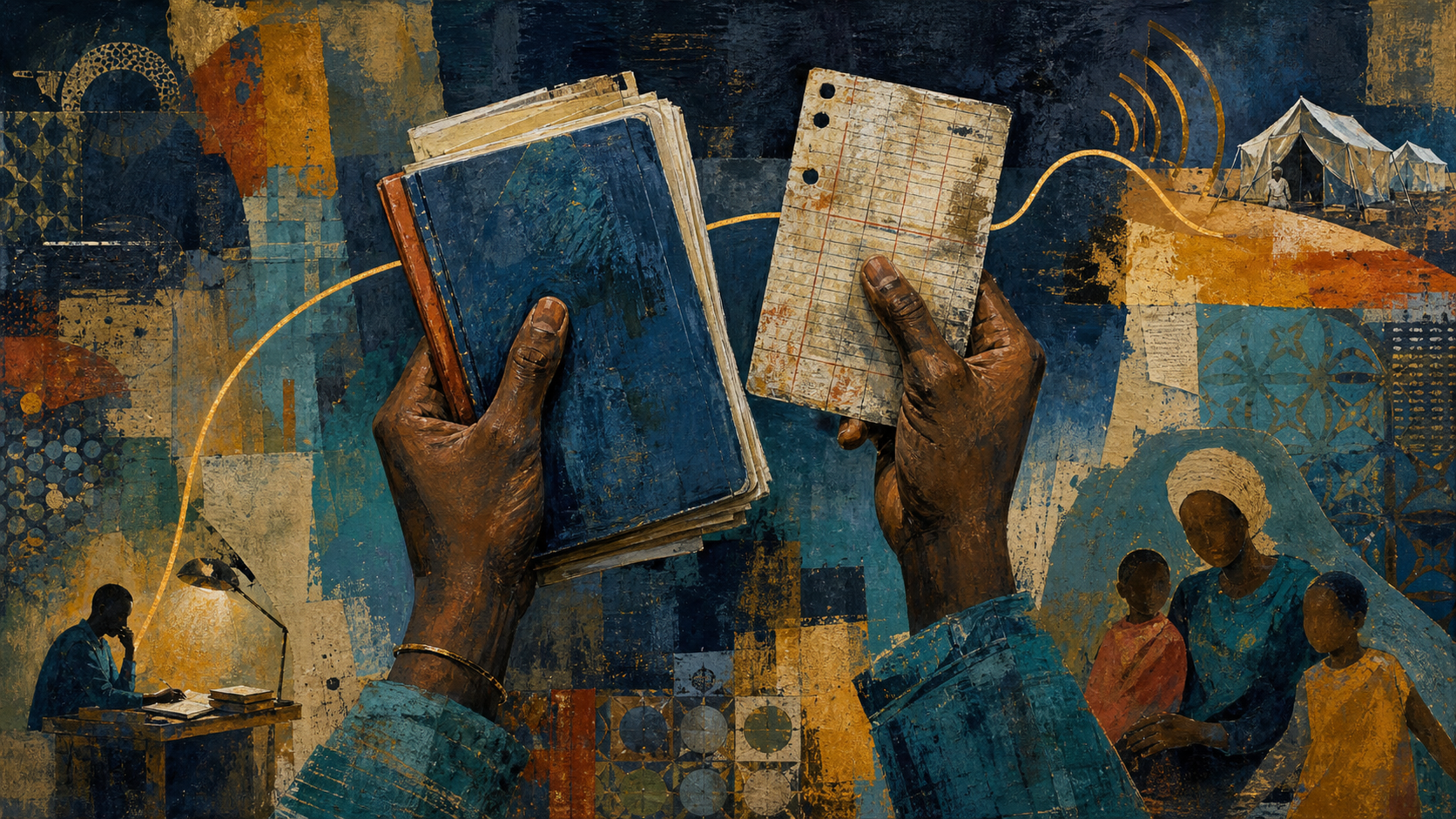
His paintings changed too. At first they were small pencil drawings made in exhaustion. Then, when he could afford a few cheap canvases, color entered. Blue for the sky he kept chasing. Yellow for the kitchen light in the apartment where he studied after midnight. Red for the warning signs he had ignored and survived. Green for the prayer mat folded beside his bed. He painted doors because every institution seemed to have one. He painted roads because no one road carried the whole journey. He painted hands because his own hands had lifted boxes, held books, counted tips, sent money, and learned not to give up on themselves.
After community college, he transferred to a university. By then he drove Uber on weekends and worked part time on campus during the week. The jobs were still jobs. Bills did not become poetic because he had better grades. But the work began to bend around school instead of swallowing it whole. Between rides, he listened to recorded lectures. At the campus desk, he helped other students find rooms, print forms, and calm down when deadlines pressed against them. He saw himself in them: the student pretending not to be confused, the young man too proud to ask, the girl translating financial aid letters for her parents, the refugee student who carried a whole family inside one backpack.
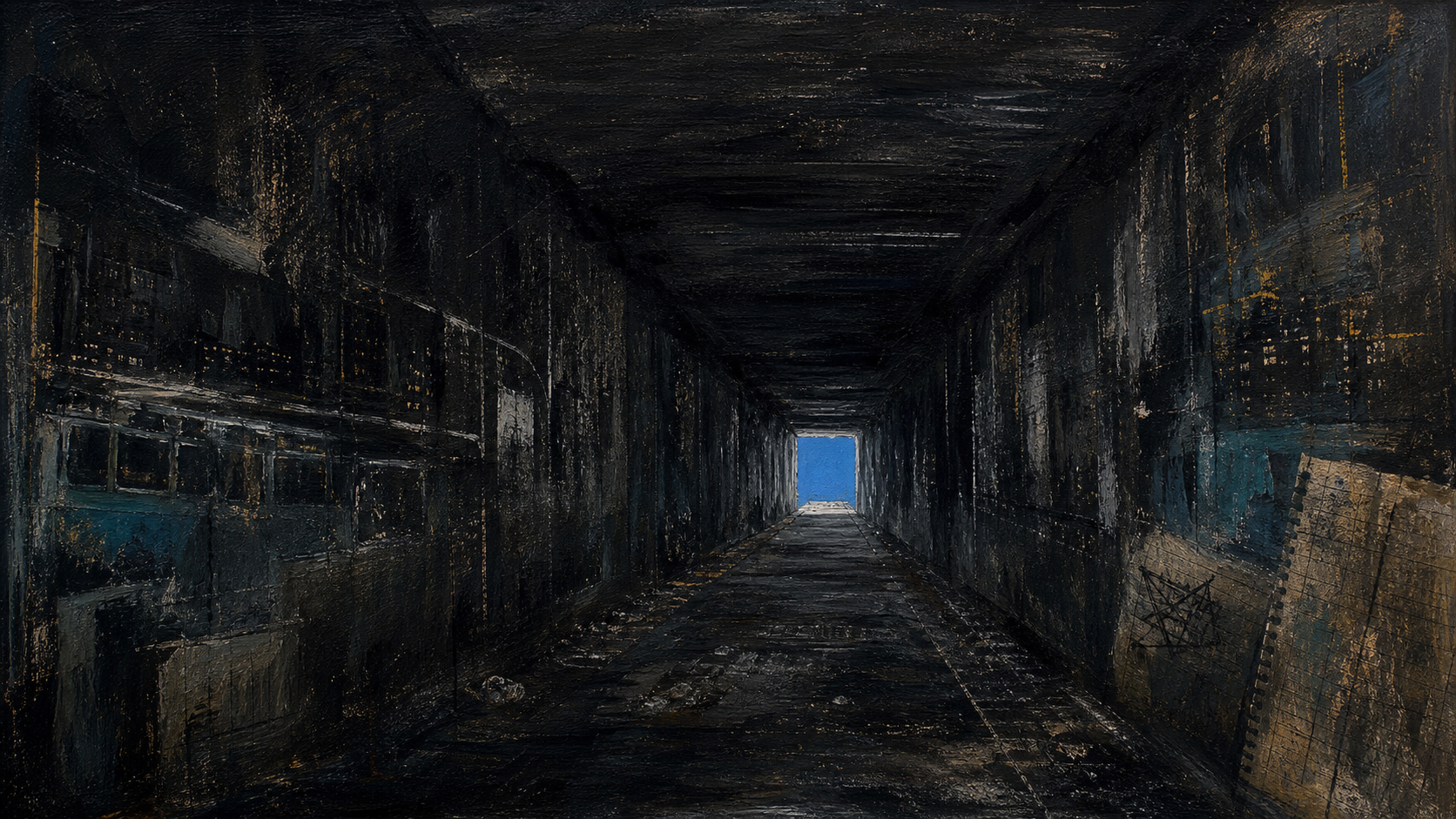
When Libaan applied to graduate school, he almost did not submit the application. The old voices returned, wearing new clothes. Who do you think you are? Your English still has an accent. Your family needs money now. People like you do not have time for dreams. He sat with the application open until the screen dimmed. Then he looked across the room at the painting of the tunnel. At the far end, he had painted a small square of blue so bright it looked almost unreasonable.
He submitted it before fear could become a plan.
The acceptance email arrived while he was parked outside a grocery store, waiting for an Uber request. He read the first line three times. Then he put the phone down, gripped the steering wheel, and laughed once, sharply, like someone had opened a window in a room he thought had no air.
Graduate school did not save him from struggle. It gave the struggle a different address. There were longer books, sharper expectations, and rooms where people discussed immigrant communities like case studies while Libaan sat there with names, faces, and funerals inside him. He learned to speak without performing pain. He learned to disagree without apologizing for being present. He learned that knowledge could be a tool, but only if it returned to the people who paid for it in sacrifice.
At his graduation, his mother watched through a video call from the camp. The connection froze twice. When his name was announced, it broke apart in the speaker, but she understood enough. She lifted both hands and said, “Alxamdulillaah.” Libaan smiled, not the smile people use for pictures, but the kind that arrives after years of holding back tears because there was no time for them.
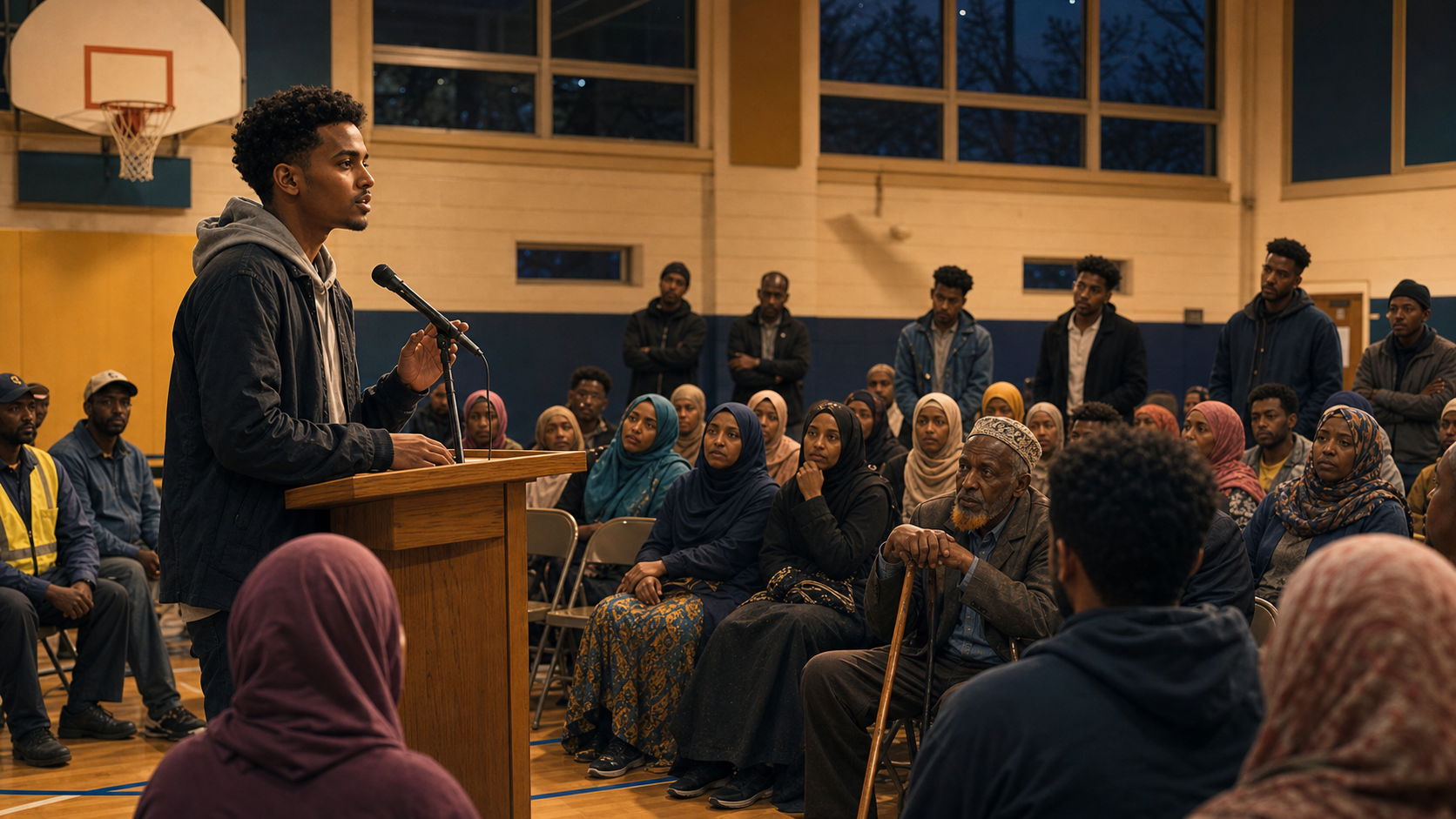
Later that evening, younger boys from the community asked him how he did it. They expected a motivational speech. He gave them something smaller and more useful.
“Start where you are,” he said. “If it is GED, start there. If it is English class, start there. If it is one community college course, start there. Do not wait for confidence. Confidence often comes after the work. Find one adult who knows one thing you do not know, and ask. When you fail, return quickly. Shame gets stronger when you give it time. Work if you must work, but protect some hours like they are money. Send help home if you can, but do not bury your future to prove you love your family. A future is also a form of support.”
One boy asked, “What if nobody believes in you?”
Libaan looked at him for a moment. He wanted to answer like an elder, but he still remembered being that boy at the bus stop, snow on his shoulders, GED paper in his pocket.
“Then borrow belief from the next step,” he said. “Do the next assignment. Attend the next class. Save the next dollar. Make the next call. You do not need to see the whole road to walk today.”
On the wall behind him hung the four paintings: the door, the road, the tunnel, and the hands. People praised the colors. Libaan let them. But he knew what the paintings really were. They were not decorations. They were evidence.
Evidence that a young man can arrive with no map and still learn direction. Evidence that difficult work can carry school for a season, and flexible work can protect study when the season changes. Evidence that art does not have to rescue your life all at once; sometimes it only keeps one corner of your mind from collapsing until you have room to breathe. Evidence that the younger generation does not need perfect mentors before it begins. It needs honest maps, small steps, and people willing to tell the truth without crushing hope.
Libaan never told the younger boys that the tunnel was easy. He told them the square of blue was real.
And when they asked where the map was, he tapped the notebook in his hand and said, “Nobody gave me one. So we are going to make one together.”